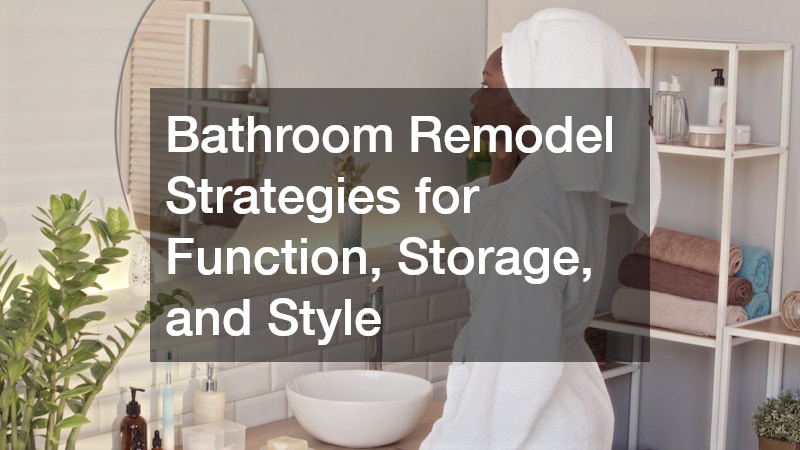
A well-designed bathroom should do far more than look attractive. It must support daily routines, manage storage efficiently, and withstand constant exposure to moisture and wear. Yet many renovations fall short because decisions are made in isolation—choosing fixtures, finishes, or layouts without considering how everything works together.
The most successful projects start with a strategy. By approaching design holistically, homeowners can create a space that feels organized, comfortable, and visually cohesive while avoiding common mistakes that lead to clutter, poor circulation, or premature material failure. The following strategies focus on aligning function, storage, and style to help readers make confident, informed decisions throughout the renovation process.
Clarify Daily Needs Before Finalizing the Project Scope

Clarifying daily needs in greater detail allows planning decisions to reflect how the space will actually function under real conditions, not just how it looks on paper. Many frustrations in renovated bathrooms stem from misaligned priorities—beautiful finishes paired with awkward layouts or insufficient storage. A bathroom remodel grounded in daily routines helps eliminate these issues before construction begins.
Usage patterns often reveal competing needs within the same household. Morning congestion, shared storage, and limited counter space can all create friction if not addressed early. Identifying these pressure points makes it easier to determine whether the layout should accommodate parallel use, provide separate storage zones, or include features that speed up daily tasks. This approach also helps avoid overbuilding features that look impressive but offer little practical value.
Revisiting key questions during planning helps translate routines into clear design requirements:
- Do multiple users need simultaneous access to the vanity or shower, or is staggered use more realistic?
- How much counter space is required to keep daily grooming tools accessible without overcrowding surfaces?
- Are there accessibility or aging-in-place considerations that affect clearances, fixture heights, or circulation paths?
- Which items must remain within arm’s reach during daily routines, and which can be stored out of sight without inconvenience?
Addressing these questions early also improves coordination between layout, lighting, and storage decisions. For example, knowing where grooming tasks occur helps determine mirror placement and task lighting, while understanding storage habits informs drawer depth and cabinet placement. When functional goals are clearly defined, every subsequent choice reinforces usability, reducing revisions and ensuring the finished space supports daily life with minimal friction.
Coordinate Bathroom Updates With Broader Renovation Goals
Coordinating bathroom updates with the rest of the home strengthens both design continuity and long-term functionality. Bathrooms often connect directly to private or high-traffic areas, making inconsistencies more noticeable. When finishes, proportions, and detailing are selected in isolation, the space can feel visually disconnected even if the workmanship is high quality. Aligning decisions within a broader home remodeling plan helps the bathroom feel like a natural extension of the surrounding spaces rather than a separate design statement.
This coordination also supports more efficient use of space and resources. Shared walls, ceilings, and mechanical systems present opportunities to address upgrades comprehensively instead of piecemeal. By evaluating how the bathroom interacts with nearby rooms, homeowners can avoid redundant work and ensure that improvements are logically sequenced.
Strategic coordination offers several tangible benefits:
- Maintains visual consistency through complementary materials, trim profiles, and door styles
- Allows plumbing, electrical, and ventilation systems to be upgraded in a single phase
- Reduces construction disruption by consolidating work across connected spaces
- Helps prevent future tear-outs caused by undersized or outdated infrastructure
- Enhances resale appeal by presenting a cohesive, well-planned home
Taking a whole-home perspective ensures that the bathroom renovation contributes meaningfully to overall performance and aesthetics. Instead of feeling like an isolated update, the project supports a unified environment that functions better and holds its value over time.
Optimize Layout and Flow With Professional Expertise
Optimizing layout and flow requires looking beyond surface-level changes and examining how movement occurs within the space. Even subtle shifts—such as relocating a vanity by a few inches or reversing a door swing—can dramatically improve circulation and reduce daily frustration. These adjustments often have a greater impact on comfort than upgrading finishes while keeping an inefficient layout intact.
More complex reconfigurations benefit from experienced oversight. A custom home builder brings a practical understanding of what can be altered safely and cost-effectively, factoring in load-bearing walls, plumbing runs, ventilation paths, and local code requirements. This expertise helps homeowners avoid design concepts that look appealing on paper but are difficult or expensive to execute in reality. Early input also clarifies where flexibility exists, allowing design energy to be focused where it delivers the most value.
Effective layout planning consistently prioritizes a few core principles:
- Clear pathways between key fixtures to avoid bottlenecks during daily routines
- Adequate clearance around doors and drawers so storage and entry points do not interfere with movement
- Logical placement of lighting relative to mirrors to support grooming tasks without shadows or glare
- Balanced proportions that prevent the room from feeling cramped or visually unbalanced
Professionals are also adept at spotting underutilized opportunities. This may include reclaiming space from oversized hallways, adjusting wall thicknesses, or reworking adjacent areas to improve the bathroom’s footprint. Their experience helps prevent common pitfalls, such as installing fixtures that dominate the room or creating tight corners that restrict movement. When flow and proportion are addressed deliberately, the bathroom feels more intuitive, efficient, and comfortable for everyday use.
Create Purpose-Driven Storage Zones Based on Usage Patterns
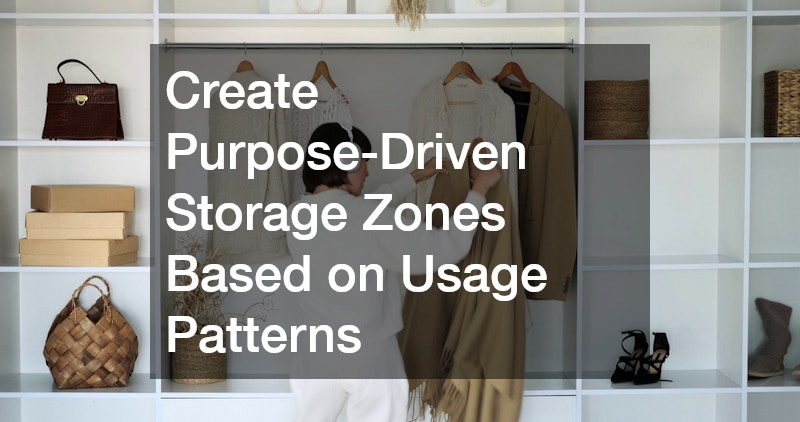
Creating purpose-driven storage zones helps transform storage from an afterthought into an active part of daily efficiency. When items are placed according to how often and when they are used, the bathroom becomes easier to navigate and maintain. This approach reduces time spent searching for essentials and prevents commonly used areas from becoming overcrowded.
Custom closets illustrate how effective zoning supports both organization and accessibility. Applying this mindset to bathroom storage encourages intentional placement rather than defaulting to symmetrical or purely decorative layouts. By assigning clear functions to each storage area, homeowners can balance convenience with a clean visual appearance.
Practical zoning strategies include:
- Keeping everyday grooming tools near the vanity to streamline morning and evening routines
- Storing linens and backup supplies in secondary locations that do not interfere with daily use
- Separating personal items for multiple users to avoid confusion and reduce clutter
- Allocating concealed storage for visual simplicity while still preserving capacity
Purpose-driven zoning also simplifies long-term maintenance. When each category has a designated location, it becomes easier to notice when items accumulate unnecessarily or when storage needs evolve. This clarity supports a calmer environment, allowing the bathroom to function smoothly without constant reorganization or compromise.
Apply Proven Organizational Principles to Bathroom Storage
Designing storage to work efficiently requires planning rather than simply increasing cabinet count. By applying principles commonly used in professional closet design, homeowners can turn limited bathroom storage into a highly functional system. The focus shifts from how much storage exists to how well each component supports daily use and long-term organization.
Vertical storage plays a critical role in this process. Bathrooms often lack sufficient floor area, making upward expansion essential. Tall cabinets and stacked storage components help capture otherwise unused wall space, while adjustable shelving allows configurations to evolve as needs change. Interior organizers further enhance efficiency by keeping items visible, separated, and easy to retrieve.
Effective organizational features include:
- Pull-out trays for small items that would otherwise get lost in deep cabinets
- Divided drawers for personal tools, preventing clutter and overlap
- Adjustable shelves that accommodate changing storage needs over time
- Integrated lighting in deep cabinets to improve visibility and usability
When storage is designed with these features in mind, everyday tasks become smoother and less disruptive. Improved visibility reduces overfilling, while proper spacing helps protect finishes from damage caused by friction or trapped moisture. The result is a bathroom that stays organized with less effort and continues to function well as household needs evolve.
Select Built-In Storage That Balances Capacity and Moisture Resistance
Bathrooms place unique demands on storage due to constant exposure to moisture and fluctuating temperatures. Materials that perform well in dry areas of the home may degrade quickly in these conditions if they are not properly specified. Storage solutions must account for these stresses while still fitting the room precisely and supporting everyday use.
Custom cabinetry provides the flexibility needed to address these challenges. By tailoring dimensions and construction details to the space, homeowners can work around plumbing, maximize interior capacity, and eliminate wasted areas that collect dust or trap moisture. Purpose-built storage also allows finishes and materials to be selected specifically for humid environments, improving durability without sacrificing visual appeal.
Key considerations when selecting built-ins include:
- Moisture-resistant substrates and finishes that resist swelling, warping, or delamination
- Proper ventilation around enclosed units to reduce humidity buildup and prolong material life
- Soft-close hardware for longevity, minimizing wear from repeated daily use
- Configurations that maximize usable interior space while maintaining clean exterior lines
When storage is designed to fit both the environment and the layout, it performs more reliably and looks more refined. Well-integrated cabinets enhance the overall composition of the room, reinforcing a sense of quality while ensuring storage remains functional and resilient over time.
Choose Flooring Materials That Perform Well in Wet Environments

Flooring choices influence not only how a bathroom looks, but also how it performs under daily use. Because bathrooms are exposed to water, humidity, and temperature changes, the selected material must maintain stability and safety without constant upkeep. A flooring surface that fails to handle moisture properly can quickly undermine both appearance and functionality.
Some homeowners explore wood floor installation to introduce warmth and visual continuity, especially when the bathroom connects to a bedroom or dressing area. While certain wood options can perform adequately, success depends on proper detailing, sealing, and environmental control. Without careful planning, wood surfaces may show wear, swelling, or discoloration over time, making maintenance a key consideration.
Others opt for vinyl planks due to their resistance to moisture and adaptability. These materials offer consistent performance in wet environments while accommodating a wide range of design preferences. Their dimensional stability and ease of maintenance make them a practical choice for homeowners who want durability without sacrificing style.
When evaluating flooring options, consider:
- Slip resistance and comfort underfoot, particularly in areas near showers or tubs
- Compatibility with radiant heating systems for added comfort
- Maintenance requirements over time, including cleaning and refinishing needs
- Visual continuity with adjacent rooms to maintain a cohesive appearance
By weighing these factors carefully, homeowners can select flooring that enhances both safety and aesthetics while minimizing long-term maintenance and risk.
Prevent Long-Term Damage With Proactive Moisture Control
Moisture-related damage often develops slowly and out of sight, making it one of the most costly risks in a bathroom if not addressed early. Water can migrate through small gaps and unprotected surfaces, compromising framing, subfloors, and insulation long before visible signs appear. Preventive planning is essential to preserving both the appearance and structural integrity of the space.
Comprehensive water management plans take a layered approach to protection, ensuring that each component works together to control moisture. Surface materials alone are not enough; underlying systems must direct water safely away from vulnerable areas. Proper detailing at transitions, corners, and penetrations is especially critical, as these points are common failure zones when overlooked.
Effective moisture control strategies involve:
- Waterproofing behind tile and fixtures to create a continuous protective barrier
- Ensuring proper slope toward drains so water does not pool or migrate outward
- Installing ventilation sized for the room to manage humidity during and after use
- Sealing penetrations and seams carefully to prevent hidden leaks
When these measures are implemented together, the bathroom is far better equipped to handle daily exposure to water. This proactive approach reduces the risk of mold growth, material degradation, and structural damage, helping the renovation perform reliably and protecting the investment over the long term.
Improve Fixture Performance and Longevity Through Water Quality

Water quality affects more than taste or cleanliness; it directly impacts fixtures, finishes, and plumbing systems. Mineral buildup can reduce efficiency and damage surfaces over time.
In areas with hard water, water treatment services help mitigate these effects. Treating water before it reaches fixtures reduces spotting, corrosion, and scale buildup, extending the life of both visible and hidden components.
Benefits of addressing water quality include:
- Easier maintenance of fixtures and glass
- Improved performance of plumbing systems
- Reduced wear on finishes
- More consistent water flow
Considering water quality as part of the renovation strategy ensures that materials perform as intended and retain their appearance longer.
A successful bathroom renovation requires more than selecting attractive finishes. It demands thoughtful planning that integrates function, storage, and durability into a cohesive whole. By understanding daily routines, organizing storage intentionally, selecting appropriate materials, and addressing long-term performance factors, homeowners can create spaces that are both beautiful and practical.
Approaching the process strategically reduces frustration, protects the investment, and results in a bathroom that supports everyday life with ease. When decisions are guided by real needs and long-term thinking, the final space delivers comfort, efficiency, and lasting value.